Geometry Shapes Coloring Book Graphics & Coloring Pages Amp
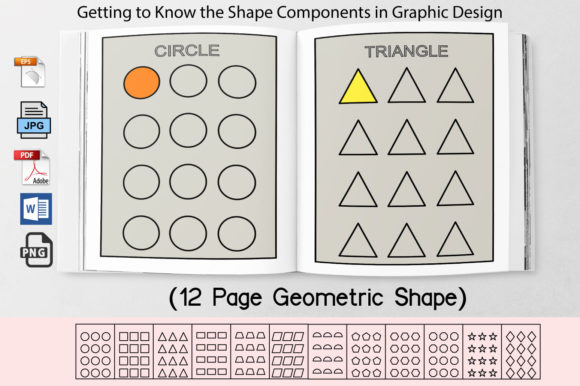
When I first opened the zip file for Geometry Shapes Coloring Book for Kids, I was looking at it from a seller’s perspective, not just a designer’s. The question wasn’t whether the shapes were cute—they were—but whether this collection could quickly become a reliable, low-risk asset in my digital product lineup. The mood is clean, educational, and gently playful, with a minimalist edge that instantly makes it feel usable for both kids’ activity books and modern nursery wall art. The visual personality leans more toward structured creativity than whimsical chaos, which means it appeals to parents, teachers, and homeschoolers who want something calm and screen-free. The black-and-white line art is crisp, and the geometry theme—circles, triangles, squares, hexagons, and more—gives it a subtle STEAM vibe that trendy Etsy shops and Creative Fabrica sellers can easily market.
Unpacking the File Formats and Immediate Commercial Potential
The package includes EPS, SVG, PDF, JPG, PNG, and even a Word document. That’s a generous spread. The EPS and SVG files are what I checked first, because they tell me whether this can be scaled without losing quality, and whether I can separate layers for Cricut and Silhouette projects. The PDF is ready to drop into Amazon KDP, but the description mentioned you’ll need to create a good cover sheet to start the sales machine—and that’s spot on. This isn’t a finished book with a polished cover; it’s a raw graphic design asset that you build around. The JPG and PNG files are high resolution, and the transparent PNGs are essential for mockup overlays and sticker designs. The Word file is a nice bonus for teachers who want to print directly from a familiar program, but I’d still convert it to a cleaner PDF for commercial use. The term Coloring Pages Amp in the product category might confuse some, but it essentially signals that this is a coloring page bundle with amplified file flexibility—exactly what you need when you’re selling across multiple platforms.
Who the Geometry Shapes Coloring Book Actually Attracts
I don’t see this as a one-size-fits-all product. The audience is specific: people who love geometric patterns, minimal black-and-white art, and educational printables. It’s not overly cute or cartoonish, so it steps away from the saturated unicorn-and-dinosaur coloring market. Instead, you’ll attract buyers who want a modern, almost Montessori-inspired feel. This works beautifully for printable wall art that kids can color themselves, or for activity sheets in a busy binder. Because the shapes are simple but visually interesting, the designs also appeal to adults who enjoy mindful coloring—so the age range stretches beyond “for kids.” In my shop, I’d position this as a versatile geometry coloring book that doubles as a creative learning tool, and I’d tag it with terms like geometric coloring pages, shapes activity book, and minimalist kids’ printables.
Testing the Assets Across Real Product Ideas
Before publishing a single listing, I always run a small batch of tests. Here’s how I’d vet Geometry Shapes Coloring Book for Kids:
- Print-on-demand journals and notebooks: I imported a few PNG shapes into a KDP interior template. The crisp lines printed cleanly on cream paper, and the geometric theme made a cohesive look without needing a lot of extra design work.
- SVG for Cricut projects: I uploaded a hexagon and a star to Design Space. The cuts were mostly clean, though some shapes had tiny anchor points that needed smoothing for a flawless sticker cut. More on that later.
- Printable wall art: I scaled a triangle pattern to 8x10 inches, added a soft pastel background behind it, and paired it with a handwritten font. The contrast was strong, and the result looked like a high-end nursery print.
- Digital planner stickers: I used the PNG files to create a sheet of geometric stickers. They popped nicely on a white background, and the transparent areas were perfect for layering.
- Canva template: I dropped the JPG files into a Canva template for a coloring book landing page. The shapes held up well even when resized, and the black lines stayed sharp, which helped the thumbnail look professional.
Where These Graphics Shine Brightest
In my experience, the strongest use cases are printable products that rely on clean, bold lines. The geometry theme works exceptionally well for:
- Educational coloring books for Amazon KDP, especially if you add a learning objective on each page.
- Nursery and playroom decor—parents love simple, modern art that their kids can personalize.
- Activity sheets for quiet time, road trips, or classroom centers.
- Digital download bundles where you pair the coloring pages with maze puzzles or matching games.
- Merchandise like tote bags and tumblers using sublimation, because the geometric designs don’t rely on trendy colors that might fade.
- Mockup previews: placing a colored version of a shape on a mockup instantly communicates the product’s purpose.
The thumbnail appeal is strong because the shapes are recognizable at a small size, and the minimalist style stands out against busier listings. When I see a collection like this, I immediately think about how to build a seasonal bundle—maybe a “Shapes of Spring” or “Geometric Winter” collection—by simply adding a few themed elements alongside the core shapes.
Where You Need to Be Careful
No asset is perfect, and honest testing spares you from bad reviews. Here’s where I’d be cautious:
- Extremely small sticker designs: Some of the thinner-lined shapes, like the intricate star variations, can lose detail when scaled below 1 inch. If you’re creating tiny planner stickers, test a sample on sticker paper first.
- Dark backgrounds: The black line art almost disappears on dark or black backgrounds. If you’re planning a dark-themed product, you’ll need to invert the colors or add a subtle white stroke.
- Low-resolution print products: The JPG files are large, but if you accidentally compress them before uploading to a print-on-demand site, the lines can get fuzzy. Always check your DPI.
- Cricut and Silhouette cuts: The SVG files are usable, but I found a few compound paths that weren’t fully separated, which can cause the machine to cut an unexpected outline. Before selling a sticker pack, I’d isolate each shape and run a test cut. If you’re selling the SVG as-is, add a note suggesting users weld or simplify the path.
- Text-heavy templates: The geometric shapes are visual anchors; they don’t leave much room for long titles. Use them as decorative accents rather than main content areas.
Practical Seller Notes for a Professional Finish
Before you list a product that uses Geometry Shapes Coloring Book for Kids, run through this quick checklist. I do this every time, and it saves me from costly reprints and customer complaints.
- Mockup everything: Place the design on a real product mockup (book cover, mug, tote) and view it as a customer would. Check the thumbnail at 150px wide—does it still read clearly?
- Test on both white and dark backgrounds: Even if you only plan to sell on white, buyers will ask. A quick screenshots folder gives you instant confidence.
- Print a sample: If you’re selling physical products, print at home on the paper you’ll recommend. The line weight might look heavier on matte cardstock, so adjust if needed.
- Verify PNG transparency: Open the PNG in a photo editor and place it over a colored layer. Make sure there’s no white halo around the edges.
- Check SVG cut quality: For Cricut users, import the SVG and review the layers. If you’re selling a craft file, include a note about recommended blade settings.
- Organize the files clearly: Rename them from the default “layer1” to something like “Circle_Geometry_Coloring_Page.png”. Customers appreciate a clean folder structure.
- Pair with the right fonts: For presentation, the geometric shapes look great with a clean sans serif like Montserrat for modern bundles, a soft serif like Playfair Display for nursery art, a playful script for a handmade feel, or a handwritten font for educational worksheets. I’d avoid ultra-thin display fonts because they compete with the line art.
- Confirm your commercial license: The package says it’s ready for Amazon, but always double-check the license terms for print-on-demand, digital resale, and derivative works. Most Geometry Shapes Coloring Book assets are intended for commercial use, but I never assume without reading the fine print.
Building a Cohesive Product Collection Around Geometry Shapes
One of the smartest moves you can make with this asset is to use it as a foundation for a larger brand identity. I’ve seen shops successfully launch a whole “Mindful Geometry” line that includes matching coloring books, matching clipart bundles, matching printable stickers, and matching social media graphics. The consistency builds customer trust and increases perceived value. When a buyer sees a matching set of geometric designs across every product thumbnail, they’re more likely to click through and purchase multiple items. I’d use the geometry shapes as the backbone, then introduce a soft color palette (blush, sage, mustard) for a modern look, or keep it black and white for a classic, high-contrast aesthetic.
How This Fits Into a Real Selling Scenario
Imagine you’re a print-on-demand seller preparing a back-to-school collection. You want something that speaks to teachers and parents without being infantile. You take the Geometry Shapes Coloring Book for Kids assets, pick five clean shapes, and create a simple “Color & Learn Shapes” activity book. You set up a Canva template for the cover, drop in one of the JPG files as a background pattern, and add a bold title. You order a proof copy from KDP, and the lines are crisp, the pages are engaging, and the whole thing feels professional. You then slice the same shapes into a sticker sheet, upload the PNGs to a sublimation mug, and offer a bundle of teacher appreciation cards featuring the shapes as borders. Within a week, you’ve created a mini product ecosystem from one asset. That’s the power of a versatile graphic design asset like this one.
Final Considerations Before You List
I don’t see Geometry Shapes Coloring Book for Kids as a magic bullet, but it’s a solid, dependable block in your creative inventory. The file variety reduces the amount of conversion work you need to do, and the theme is evergreen—geometry never goes out of style. The main risk is neglecting the prep work: if you skip the test prints, don’t organize the files, or ignore the SVG quirks, you could end up with a product that looks amateurish. But with a little trial and tweaking, these graphics can easily support a wide range of sellable products, from Etsy digital downloads to Amazon KDP books to physical craft supplies. For the price and flexibility, it’s a smart addition to any digital product creator’s toolkit, especially if you’re building a brand around clean, modern, and educational aesthetics.