Mushroom House Coloring Page Graphics & Coloring Pages Amp Review
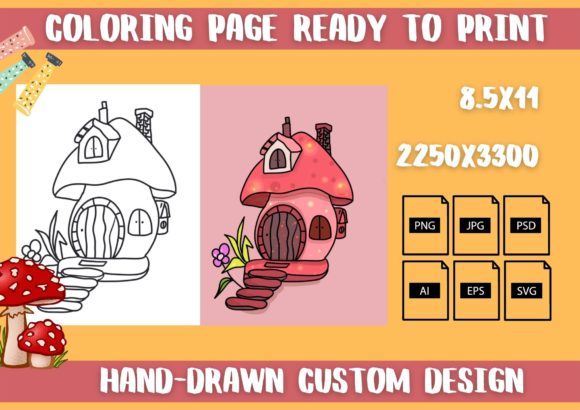
When I first opened the Mushroom House Coloring Page file, I immediately understood the kind of buyer this would attract. The hand-drawn black and white printable has a whimsical, storybook quality that feels both nostalgic and fresh. It is not overly complex, which is a strength for sellers who want a versatile graphic design asset that can move across multiple product categories without demanding too much from the end user. The linework is clean, the composition is balanced, and the overall mood sits comfortably between playful and decorative. This is the sort of printable design that appeals to parents looking for quiet-time activities, adults who enjoy mindful coloring, and crafters who want a charming base for their next project.
From a creative marketplace perspective, the illustration has a woodland fantasy feel that works well across seasonal collections, particularly autumn and spring themes. The mushroom house itself is detailed enough to feel substantial but not so intricate that it becomes intimidating. For anyone building a design bundle around nature, fairy tales, or cottagecore aesthetics, this asset would fit without clashing. The visual hierarchy is clear. The central structure draws the eye first, then the surrounding botanical elements guide attention outward, which makes it easy to use in layouts where the coloring page needs to be the star of a product preview or a product mockup.
Evaluating the Hand-Drawn Character for Commercial Product Lines
One of the first things I check with any digital product meant for resale is whether the illustration style feels consistent enough to anchor a collection. Mushroom House Coloring Page is a hand-drawn printable black and white coloring page that will help you to fill your needs when you are building a cohesive shop aesthetic. The line weight is uniform, which means it scales well, and the composition does not rely on shading that might disappear during printing or conversion. That is a practical consideration if you plan to convert it into an SVG design for cutting machines or a PNG design for sublimation.
This professional-looking fresh coloring page can make a great present for kids, but I see its commercial potential extending far beyond the children's market. The illustration carries enough charm to work as a commercial design element in products aimed at adults. Think journal covers, planner inserts, or even fabric patterns. The mood is gentle rather than juvenile, which widens its audience considerably. For print-on-demand sellers, that flexibility is valuable because it means you can test the same artwork across multiple demographics without repositioning your entire brand.
Testing the Asset Across Real Product Scenarios
Before I list anything in my shop, I run a design through a series of practical tests. With Mushroom House Coloring Page, I started by placing it on a standard Etsy product mockup for a printable coloring sheet. The thumbnail read well at small sizes, which is critical for digital download listings where the preview image often determines whether a buyer clicks through. The line art remained crisp without any muddying, even when I reduced the image to thumbnail dimensions.
Next, I tested it as a sublimation design on a mug mockup. The black and white linework transferred cleanly in my preview, and the composition wrapped naturally around the curved surface without awkward cropping. For t-shirt design applications, I placed it on both light and dark backgrounds. On a white shirt, the illustration looked like a custom coloring tee concept. On a darker background, I needed to invert the lines for visibility, which is a simple adjustment but worth noting before you commit to offering it on dark merchandise.
For Cricut project users, I examined how the lines would translate into cut paths. The design has enough open space that a vinyl cut would be manageable, but some of the finer botanical details around the mushroom base might require a sharp blade and a steady weeding hand. If you are packaging this as part of a design bundle for crafters, including a slightly simplified version alongside the original would be a thoughtful touch that increases perceived value.
Where This Coloring Page Truly Shines
After testing, I believe the strongest applications for this asset are in printable design products, particularly those sold as digital downloads on platforms like Etsy, Creative Fabrica, or Shopify. The illustration makes a beautiful standalone coloring sheet, but it also works as part of a larger collection. Pairing it with similar woodland-themed pages creates a design bundle that feels curated rather than random, and that curation is what builds brand identity over time.
I also see strong potential in Canva template applications. Imagine a set of invitation templates where this illustration serves as a decorative frame or a background element. The black and white nature means users can easily recolor it within Canva to match their event palette. For social media graphics, the artwork could become a recurring visual element that ties a feed together, especially for accounts focused on slow living, nature crafts, or family activities.
The asset also performs well in product mockup contexts. If you sell physical products like notebooks or activity kits, placing this coloring page on a mockup instantly communicates what the buyer will receive. The visual hierarchy of the illustration makes it easy to overlay text or branding elements without obscuring the key details. For packaging design, the line art style lends itself to a handmade, artisanal feel that works particularly well for small business branding in the children's or wellness spaces.
Understanding the Limitations and Using Caution
No graphic design asset is perfect for every application, and Mushroom House Coloring Page has some boundaries worth respecting. The first is scale. While the illustration holds up well at standard print sizes, pushing it to very large formats like wall murals might reveal inconsistencies in the hand-drawn lines that are not visible at smaller dimensions. If you are considering it for large-format print-on-demand products, test a sample first.
Sticker design is another area where caution is needed. The full composition is too detailed to work as a small sticker. The fine elements around the mushroom gills and the surrounding foliage would blur together at anything under three inches. If stickers are a core part of your product line, consider isolating individual elements from the illustration rather than using the full scene. A standalone mushroom, a single flower, or a small door detail would make better sticker design candidates than the complete composition.
For Cricut project and Silhouette users, the cutting path complexity is moderate. The outer silhouette is clean, but the internal cut lines require patience. If you are marketing this as an SVG design for cutting machines, be upfront about the detail level. Including a simplified cut file alongside the detailed version will reduce frustration and returns. I have learned that crafters appreciate honesty about complexity more than they appreciate a design that looks easy but cuts poorly.
Text-heavy templates also present a challenge. The illustration is detailed enough that overlaying paragraphs of text can create visual clutter. If you are using it in a Canva template or an invitation, keep the typography minimal and let the artwork breathe. Pairing it with a clean sans serif font or a delicate script font works better than crowding it with bold display type. I tested it with a serif font for a bookplate design and the combination felt elegant, but adding more than a few lines of text started to compete with the illustration.
Practical Seller Notes From a Production Perspective
Before you publish a listing featuring this digital product, run through a checklist that will save you headaches later. Test the design on real mockups rather than assuming it will look good on every product. I always preview a new illustration on at least three different product types before committing to a collection. Preview it as a marketplace thumbnail at the size it will appear in search results. If the details get lost or the composition looks confusing, your click-through rate will suffer regardless of how beautiful the full-size artwork is.
Check how it looks on white and dark backgrounds. The black line art is designed for light surfaces, and using it on dark backgrounds without adjustment will make it disappear. Test print colors if you are offering physical products. Not all printers handle fine lines equally, and a home inkjet will produce different results than a commercial laser printer. Verify PNG transparency if you are using the file in layered designs. A white background where you expected transparency can ruin a product mockup or a sublimation design layout.
Inspect SVG cut quality when relevant to your product line. Open the file in your cutting software and run a simulation before offering it to customers. Confirm file resolution and ensure it meets the minimum requirements for the largest product you plan to sell. Organize files clearly for customers with descriptive names and a simple folder structure. Nothing undermines a five-star review faster than a confusing zip file.
Confirm commercial licensing before selling finished products. Some design assets come with restrictions on how many units you can sell or which platforms you can use. Read the license terms carefully and keep a copy for your records. If the license allows for commercial design use, you have a versatile asset that can support multiple revenue streams. If it is limited to personal use, respect those boundaries or reach out to the creator for an extended license.
Pairing the Illustration With Typography and Branding Elements
One of the most effective ways to elevate a printable design is through thoughtful font pairing. Mushroom House Coloring Page has a storybook quality that pairs beautifully with a handwritten font for a personal, homemade feel. For a more polished look, a refined serif font adds structure that contrasts nicely with the organic linework. If you are designing for a modern audience, a clean sans serif font keeps the focus on the illustration while adding a contemporary edge. A flowing script font works well for invitation designs or greeting card products where the artwork supports a romantic or whimsical message.
I also recommend testing different display font options for title treatments. The illustration has enough personality that an overly decorative font can create visual competition. A simple, elegant display face lets the artwork dominate while still giving your product a professional title treatment. This attention to typography is part of building a cohesive brand identity that customers recognize across your creative marketplace listings.
Building a Product Collection Around a Single Asset
One graphic design asset can anchor an entire product line if you approach it strategically. With Mushroom House Coloring Page as the foundation, I would build out a collection that includes the black and white printable, a pre-colored version for buyers who want instant decor, a simplified SVG design for cutting machines, and a PNG design with transparent background for Canva template users. Adding a matching clipart set with individual elements extracted from the illustration gives crafters more flexibility and increases the perceived value of the design bundle.
For print-on-demand expansion, the same artwork can appear on mugs, tote bags, t-shirts, and notebooks without requiring additional illustration work. The key is presenting each product with high-quality product mockup images that show the design in context. A mug design mockup, a tote bag print preview, and a framed wall art display all tell the customer exactly what they are buying and reduce the uncertainty that kills conversion rates.
For small business branding, consistency across your digital product offerings builds trust. When a customer sees a unified style across your Etsy product listings, they are more likely to browse your shop, follow your brand, and return for future purchases. This single handmade business asset, used thoughtfully, can contribute to that larger goal of creating a recognizable and reliable creative marketplace presence.
Final Verdict for Digital Sellers
Mushroom House Coloring Page earns its place in a commercial product lineup through versatility, clean execution, and broad audience appeal. It is not a solution for every product category, and sellers should approach sticker-sized applications, dark-background merchandise, and highly detailed cutting projects with realistic expectations. But for printable collections, sublimation designs, Canva templates, and seasonal bundles, it delivers consistent quality that supports visual hierarchy and brand identity goals.
The hand-drawn character gives it an advantage in a market saturated with digitally generated artwork. Buyers looking for authentic, warm, and approachable design assets will respond to the personality in the linework. When you test it properly, pair it with complementary typography, and present it through clean product mockup images, this commercial design asset can support multiple product categories and help you build a more professional-looking digital download shop. For the right seller, it is a worthwhile addition to a growing design bundle library.