KDP Coloring Pages Mandala Pattern V-05: Embroidery Review
First Glance: A Mandala That Feels Quietly Confident
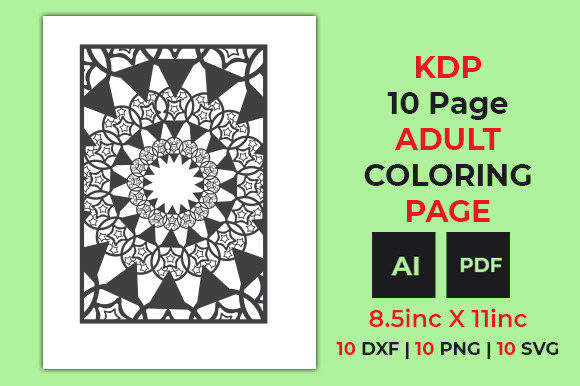
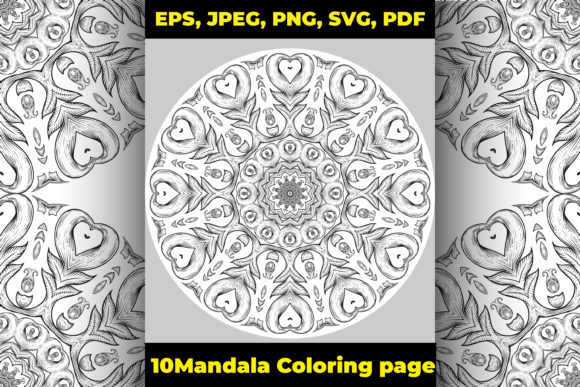
When I first opened the KDP Coloring Pages Mandala Pattern V-05 files, I was struck by the immediate sense of balance. The mandala is built around a central flower-like motif, with layered petals radiating outward in even, unhurried rings. The rhythm of the design is what grabs you. Every curve, every tiny teardrop shape, every repeating geometric border feels intentional. It’s not overly busy. There’s a calm, symmetrical structure that makes it feel both elegant and accessible. For an embroidery designer, this mood is a gift. It says “heirloom” without being stuffy, and “handmade” without looking amateurish.
I wasn’t looking at this as a coloring page. I was mentally testing it as a stitch-ready motif. The linework is clean, the spacing between elements is generous, and the overall silhouette is circular—roughly 8.5 inches across, based on the standard page dimensions provided. That’s a perfect size for a statement embroidery piece on a tote bag, a sweatshirt back, or a framed hoop art. The six included SVG and PNG files gave me a fast way to preview it on dark and light backgrounds, and the vector sources made me confident I could scale it cleanly for digitizing.
Real Project Scenario: The Linen Tote Experiment
I’m prepping a small batch of custom embroidered linen tote bags for a local boutique’s spring collection. The shop owner wants something that feels organic, slightly bohemian, but still polished enough to command a premium price. I immediately thought of the KDP Coloring Pages Mandala Pattern V-05 as a candidate. The mandala’s petal structure would sit beautifully on the front pocket of a natural linen tote. If I stitched it in a soft, earthy thread palette—cream, terracotta, sage, maybe a touch of ochre—it would look like a hand-drawn botanical illustration translated into thread.
But I’m not just guessing. I’m already running through the practical checklist. The design has a lot of small, separated elements. That’s actually a good thing for embroidery, because I can choose to use a mix of satin stitch for the petals, running stitch for the delicate ring details, and a light fill stitch for the central circle. The open structure means the fabric can still breathe. Less dense stitching reduces the risk of puckering on linen, which can be a challenge with heavy fill designs. I’d digitize the mandala with a slight underlay, especially on the outer rings, to keep the edges crisp after washing. I’m not worried about the tiny dots—they can be plotted as single-needle running stitches, and if placed thoughtfully, they’ll read as delicate seed beads.
Where the Design Truly Shines in Embroidery
Over the years, I’ve learned that a strong embroidery design doesn’t just look good on a screen. It has to hold up under real stitching conditions. The KDP Coloring Pages Mandala Pattern V-05 has a few traits that make it a genuine candidate for a commercial embroidery project:
- Symmetrical, but not rigid. The organic petal shapes keep it from feeling mechanical. That softness translates beautifully to thread, where slight variations in stitch angle add life.
- Clear negative space. The gaps between rings reduce stitch density and give the eye a rest. This is especially important on garments that will be worn and washed repeatedly.
- Versatile scale. Because the design is vector-based and already comes in a clean 8.5x11 inch format, I can easily resize it to fit a 5x7 hoop for a cap, or enlarge it for a jacket back without losing detail.
- Instant giftability. A finished embroidered pillow cover with this mandala, in muted tones, would make a stunning wedding gift or a personalized housewarming present. The design carries a universal, meditative appeal that works across age groups and home styles.
Real-World Limitations: When to Be Cautious
No design is perfect for every project, and I’m here to be honest about where this one might trip you up. The KDP Coloring Pages Mandala Pattern V-05 is intricate without being microscopic, but those outermost ring details are still quite fine. If you’re planning to stitch this on a highly textured fabric like terry cloth or a thick knit, some of the delicate linework will likely get lost. I’d avoid using it on a terry towel unless you scale it up significantly and beef up the stroke widths during digitizing.
Stretchy fabrics also demand caution. A mandala’s circular symmetry can look distorted if the fabric shifts during hooping. I’d advise a firm cutaway stabilizer and a basting stitch around the perimeter. On dark fabrics, the subtle inner details might vanish if your thread color choice is too low-contrast. I tested a quick black-and-white mockup using one of the PNG files, and it was clear that the design needs a medium-to-high contrast thread palette to maintain legibility. A monochromatic pastel approach on white cotton? Stunning. The same pastel on charcoal linen? It might read as a blur. Always test on a scrap of the actual fabric first.
Curved surfaces like caps are another story. The mandala’s circular shape would need to be adjusted to fit the crown panel without looking squashed. I’d probably use only the central medallion portion for a hat, cropping the outer rings entirely. That’s a creative choice, not a flaw—just something to think through before you commit to a production run.
From Coloring Page to Embroidery File: The Digitizing Reality
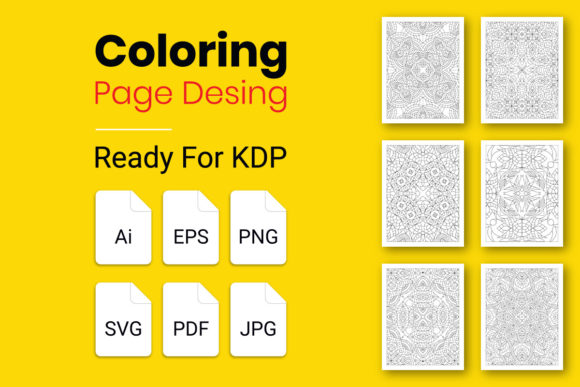
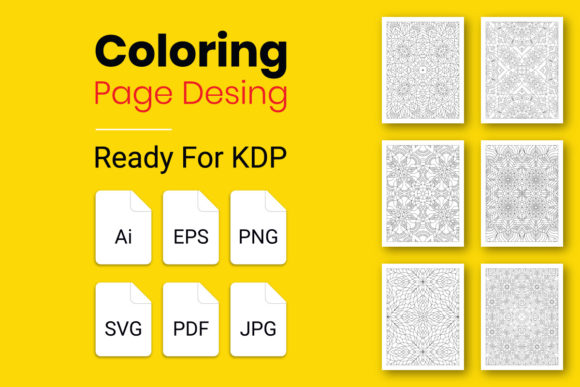
Let’s be clear: the KDP Coloring Pages Mandala Pattern V-05 is not an embroidery file. It’s a Graphics set, delivered in vector and raster formats. You get an AI, EPS, SVG, PNG, JPG, and PDF. That’s exactly what I’d expect from a product in the Coloring Pages Amp category. For me, this is a huge asset. I can bring the SVG into my digitizing software, trace the shapes with precision, and assign stitch types based on my own machine and thread preferences. I have full control. But if you’re a beginner looking for a ready-to-stitch DST or PES file, this isn’t it. You’ll need to invest time in digitizing, or hire a professional. The good news is that the clean vector lines make the conversion process much faster than working from a pixelated JPG.
I also appreciate that the zip file includes six PNG and six JPG variations. That suggests the designer included different colorways or perhaps subtle tint variations. Those are useful for creating printable mockups of your finished embroidered product. If I’m listing a handmade tote bag on Etsy, a quick digital mockup showing the mandala in a warm blush tone can help a buyer visualize the final piece. I don’t need to stitch a sample for every color combination. That’s a practical time-saver for a small business owner.
Thread, Texture, and the Handmade Feel
When you stitch a mandala, the thread itself becomes part of the design’s soul. The KDP Coloring Pages Mandala Pattern V-05 has a gentle, almost meditative character. I’d choose a matte polyester thread to keep the sheen low, maybe even a cotton thread for a more rustic, handcrafted look. The petal shapes are wide enough to hold a satin stitch without narrowing to a point that bends the needle, though I’d test the very tips of the inner petals. If they’re too sharp, a slight modification in the digitizing stage—rounding the apex just a fraction—can prevent thread breaks without losing the design’s essence.
For a small boutique product, like a set of embroidered napkins or a tea towel, I’d stitch only the central mandala medallion, leaving the outer rings as a subtle border. The design’s layered structure gives you that flexibility. You can use the whole thing, crop it, or even take individual petals and create a scattered floral pattern. That kind of modularity adds serious value to a design asset, especially if you’re building a cohesive brand look across multiple products—aprons, oven mitts, and kitchen towels in matching motifs.
Customer Perception and Shop Value
I’m always thinking about the end buyer. If I’m selling a personalized embroidered sweatshirt with this mandala on the back, what does the customer see? They see a piece that feels intentional, not slapped on. The symmetry signals care and quality. The mandala carries a sense of mindfulness and calm, which is a strong selling point for gifts, self-care items, and nursery decor. I can easily envision a new parent buying a custom baby blanket with this design stitched in a soft, heathery gray. The design’s neutrality makes it gender-inclusive and ageless. That widens your customer base immediately.
For an Etsy seller, the KDP Coloring Pages Mandala Pattern V-05 offers a distinct visual that stands out in a sea of generic floral embroidery. The mandala style is recognizable but not overdone. Paired with a natural linen or a cozy french terry fabric, it creates a boutique aesthetic that justifies a higher price point. I’d confidently use it on a line of handmade pillows, and I’d photograph them with dried flowers and warm wood tones to complete the story.
Practical Checklist Before You Sew
If you’re ready to test this design on your own machine, here’s what I’d recommend:
- Always stitch a trial on scrap fabric, preferably the same type you’ll use for the final product. Watch for thread tension issues on the finer details.
- Check your hoop size. At full 8.5-inch width, this design needs a hoop that can handle at least a 9x9 inch area comfortably. For smaller hoops, scale down or use only the central portion.
- Use a medium-weight cutaway stabilizer for garments, and a tear-away for flat items like wall art. Add a water-soluble topping if you’re stitching on fluffy fabric.
- Test your thread color contrast on both light and dark backgrounds. A quick black-and-white printout of the PNG file can reveal whether the design holds its shape.
- Inspect the tiny dots after the first stitch-out. If they aren’t reading well, consider replacing them with a small French knot stitch effect or removing them entirely.
- Confirm your licensing. The product description doesn’t specify commercial embroidery terms, so reach out to the original designer to clarify if you plan to sell finished items or digital files created from this artwork. Treat the design as a creative asset and respect the original artist’s rights.
Final Verdict from My Studio Bench
After spending time with the KDP Coloring Pages Mandala Pattern V-05, I see it as a highly adaptable visual foundation for embroidery work. It’s not a plug-and-play embroidery file, but for a digitizer or a maker who enjoys the full creative process, the clean vectors and thoughtful composition are a pleasure to work with. The mandala’s calm, balanced energy translates naturally into thread, and the design’s built-in negative space makes it forgiving on a variety of fabrics. I’d use it without hesitation on a linen tote, a nursery pillow, a lightweight sweatshirt, or a set of custom tea towels for a craft fair. The key is to respect the detail level, test thoroughly, and make thoughtful stitch choices.
For a small business owner building a handmade brand, this design offers a consistent, elegant look that can easily become a signature motif. It’s not flashy, but that’s its strength. It whispers rather than shouts, and in the world of custom embroidery, that quiet confidence is exactly what turns a simple product into a keepsake. I’ll be keeping the SVG files in my design library, ready for the next boutique order. And I’ll probably stitch a small sample patch just for myself—because some designs are too pretty not to test in real thread.