Valentine Day Coloring Pages Pattern: An Embroidery Designer’s Review
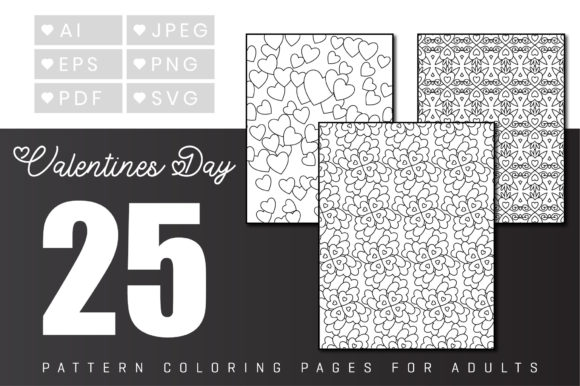
When I first opened the Valentine Day Coloring Pages Pattern bundle, I didn’t see it as a simple set of graphics. I saw line work that could breathe, repeat, and shift into something tactile. The files are described as seamless pattern pages intended for adult coloring, but my mind immediately jumped to thread, stabilizer, and hoops. As someone who digitizes for a small handmade shop, I’m always looking for crisp, romance-driven motifs that can carry a project without feeling overdone. This collection does exactly that—it offers a delicate, hand-drawn personality that feels genuine, not mass-produced.
My first test was a mental one: a custom tote bag for a Valentine’s boutique order. The client wanted something soft but not childish, detailed enough to feel special but not so dense that it would stiffen the fabric. The Valentine Day Coloring Pages Pattern gave me a garden of hearts, tiny florals, and gentle swirls that repeat seamlessly. The mood is lightly nostalgic, almost like a love letter etched into vintage paper. That kind of visual tone translates beautifully into thread, especially when you choose a fine-weight polyester or a matte cotton thread on a natural canvas fabric.
Why This Pattern Feels Right for Real Embroidery Projects
Most graphics labeled as coloring pages are too busy or lack the structural clarity embroidery demands. The Valentine Day Coloring Pages Pattern, however, has a clear hierarchy of elements. The larger motifs anchor the design, while the smaller filler details can be treated as accent stitches or even omitted during digitizing if you want a cleaner look. This gives you control, which is essential for a working designer. You aren’t stuck with a rigid composition; you can extract a single heart cluster for a patch, use the full repeat for a pillow cover, or mirror a section for a sweatshirt front.
What I appreciate most is the seamless nature of the pattern. When you’re planning a large embroidery area—say, the back of a denim jacket or a quilt block—having a tileable design saves hours of manual alignment. The repeat is well-constructed, with no obvious breaks, so the eye moves naturally across the fabric. For machine embroidery, that means you can set up a multi-hoop run or a single large hoop placement and trust that the result will look intentional, not choppy.
From Line Art to Thread: Digitizing Considerations
This is not a ready-to-stitch embroidery file. It’s a graphic asset, and you’ll need to digitize it yourself or hire a professional. But the line-art basis of the Valentine Day Coloring Pages Pattern makes the conversion straightforward. The crisp outlines suggest a running stitch with a triple or bean stitch for subtle texture, or a narrow satin stitch for a bolder line. I’d avoid filling large areas with dense satin unless you’re working on a very stable fabric—too much coverage can pucker lightweight canvas or twill. Instead, let the negative space breathe, just like a coloring page. The airy feel translates into a softer hand on the finished product.
One thing I always check is how the design handles small details. The pattern includes tiny dot accents and thin petal lines. These can be charming, but they need to be scaled carefully. On a 4x4 hoop, some of those miniature elements might disappear or become blobs if your stitch length is too short. I recommend testing at multiple sizes on scrap fabric before committing to a final product. A 5x7 or 6x10 hoop gives you enough room to preserve the intricacy while keeping the design recognizable.
Where This Pattern Shines in a Handmade Business
I ran a mental inventory of my best-selling Valentine’s items, and the Valentine Day Coloring Pages Pattern fit into almost every category. It’s romantic enough for a personalized wedding gift, playful enough for a toddler’s heart-printed tee, and elegant enough for a linen kitchen towel set. The versatility comes from its neutral, sketch-like quality. You can stitch it in classic red and pink for a traditional look, or go monochromatic with charcoal thread on a blush background for a modern aesthetic. That flexibility is a huge asset for small business owners who need one design to serve multiple product lines.
For Etsy sellers, the pattern’s hand-drawn charm is a strong selling point. Customers often look for something that feels personal and a little imperfect—the opposite of sterile clip art. A tote bag embroidered with this design, paired with a simple initial or date, becomes a keepsake. I’ve also seen success with embroidery on baby items: a tiny lovey blanket or a soft bib featuring just a corner of the pattern. The seamless repeat means you can use a fragment without losing the design’s integrity.
Real-Life Scenario: The Valentine’s Tote Bag Test
Let me walk you through how I’d actually use this bundle. A client ordered five custom totes for her bridesmaids. She wanted a romantic, all-over pattern that felt like a love note, not a billboard. I pulled one of the seamless pattern files from the Valentine Day Coloring Pages Pattern set, scaled it to fill a 7x12 hoop, and digitized it with a single-color running stitch. I used a cream-colored canvas tote, a soft mauve thread, and a medium-weight cutaway stabilizer. The result was delicate, almost like a drawing, and the fabric remained soft. The client loved it, and I immediately added the design to my shop’s Valentine’s collection.
That tote bag test taught me a few things. First, the pattern’s open areas are a gift—they let the fabric texture show through, which adds warmth. Second, you need to be mindful of thread tension. The fine lines can pull if your tension is off, causing the fabric to pucker slightly. A well-tested stitch file and a top-quality stabilizer make all the difference. Third, the design works beautifully when paired with a simple satin-stitch monogram or a small heart appliqué. It’s a team player, not a scene-stealer.
Products That Benefit from This Pattern’s Character
Based on my experience, the Valentine Day Coloring Pages Pattern is a natural fit for a wide range of embroidered goods. Here are a few that I’d confidently recommend:
- Custom apparel: sweatshirts, t-shirts, and denim jackets with a single large motif or a scattered repeat.
- Accessories: canvas tote bags, pouches, and caps. The pattern’s curved lines adapt well to the front panel of a structured cap.
- Home goods: pillow covers, tea towels, and table runners. The seamless repeat makes it easy to cover a larger area without mismatched joins.
- Baby and nursery items: bibs, swaddle blankets, and soft books. Use a small section for a delicate, heartfelt accent.
- Gifts and keepsakes: personalized hoops, wedding handkerchiefs, and embroidered patches. The design’s intimacy is perfect for sentimental projects.
However, I’d be cautious with dark, textured, or extremely stretchy fabrics. The fine lines can get lost on a heavily napped fabric like fleece, and the pattern’s delicate nature might not pop on a black background unless you use a bold, high-contrast thread and a heavier stitch. On super-stretchy knits, I’d stick to a smaller, stabilized area and avoid placing the design over a seam or high-tension zone.
Practical Tips for Stitching the Valentine Day Coloring Pages Pattern
Before you load this design into your machine, run through a few pre-flight checks. I do this with every new graphic I digitize, and it saves me from ruined projects and wasted materials.
- Test on a similar fabric: Even if you’re confident, a 10-minute stitch-out on a scrap tells you everything about tension, detail clarity, and coverage.
- Check your hoop size: The seamless repeat might require a larger hoop than you think. Measure the full repeat area and plan your placements accordingly.
- Review thread color against the fabric: A pale pink thread on cream canvas can look washed out. I sometimes test in black and white mockups to see if the contrast is strong enough.
- Inspect small details: Zoom in on the file and look for elements that are too thin or too close together. If a line is less than 0.5mm wide in your digital file, it might not stitch well.
- Use the right stabilizer: For woven fabrics, a medium-weight cutaway is my go-to. For knits, a no-show mesh stabilizer prevents distortion while keeping the back soft.
- Confirm licensing: The Valentine Day Coloring Pages Pattern is part of the Coloring Pages Amp Graphics category, so it’s a digital asset. Before you sell finished items or use it in a commercial embroidery project, verify the license terms. Some bundles allow physical product sales, others don’t. Always check.
How This Pattern Elevates Your Brand and Customer Trust
When you stitch a design that has this much hand-drawn warmth, you’re not just selling a product—you’re selling a feeling. I’ve noticed that my customers respond to embroidery that looks like it was sketched with love, not machine-generated. The Valentine Day Coloring Pages Pattern gives you that competitive edge. It photographs beautifully for Etsy listings, holds its own in craft fair displays, and becomes a talking point when someone sees it on a tote bag across the room.
From a branding perspective, consistency matters. The seamless pattern can become a signature element across your product line. Imagine a set of coordinating items: a tea towel, a matching apron, and a small zippered pouch all featuring the same delicate pattern in different scales or placements. That kind of cohesive presentation builds trust and repeat buyers. It also makes your shop look polished and professional, even if you’re a one-person operation.
Why This Bundle Appeals to Multiple Creatives
While I’m reviewing this from an embroidery designer’s viewpoint, I can’t ignore that the Valentine Day Coloring Pages Pattern is also a smart pick for other crafters. Digital product sellers can use it for printable mockups, printable wall art, or sublimation designs. Handmade shop owners who work with vinyl or screen printing will find the clean lines easy to trace and cut. The seamless nature of the files means they can tile beautifully for fabric printing or scrapbooking, too. It’s a versatile asset that doesn’t limit you to one medium, which is exactly what I look for when I invest in graphics.
Final Thoughts on Using This Design in Your Embroidery Work
After spending serious time analyzing the Valentine Day Coloring Pages Pattern, I’m confident it’s a valuable addition to any embroidery designer’s digital library. The mood is heartfelt, the repeat is flawless, and the artistic style translates into thread with grace. You’ll need to digitize it yourself, but that also means you have the creative freedom to adapt it to your exact vision. Whether you’re stitching a single patch or an entire tote bag, the design holds up. My advice is to treat it like a high-quality sketchbook page: respect its delicacy, test your settings, and let the open spaces do some of the heavy lifting. When you do, the finished product will feel as special as the love it’s meant to celebrate.