Water Lily Flowers Coloring Book Pages: A Designer’s Honest Review
When I first opened the Water Lily Flowers Coloring Book Pages, I wasn’t just looking at a flat digital file. I was picturing how it would translate into thread, onto fabric, and into a real product someone would buy or gift. The file is described as a digital printable coloring book page for kids and adults, built in vector Adobe Illustrator. That vector foundation is the first thing that caught my attention—it means clean lines, scalable shapes, and far fewer headaches when you start converting it into a machine embroidery design.
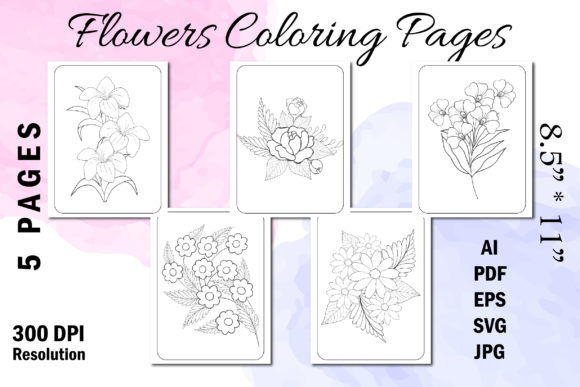
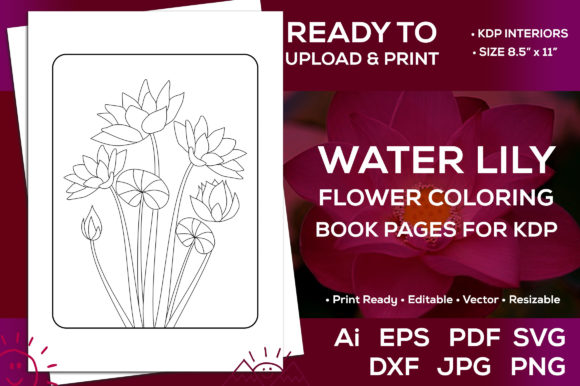
The mood is calm but not sleepy. The water lily forms have a natural, organic flow, and there’s a gentle balance between open petals and tighter bud shapes. This isn’t a hyper-detailed botanical illustration, but it doesn’t need to be. For embroidery, simpler geometry often reads better. The design has enough personality to feel intentional, and the layout feels like it would sit beautifully on a tote bag, a pillow cover, or a sweatshirt without overwhelming the space.
First Impressions: What This Design Actually Feels Like
As an embroidery designer, I’m always scanning for motifs that have a clear visual center and a definable silhouette. The Water Lily Flowers Coloring Book Pages deliver exactly that. The flowers are recognizable from a quick glance, and the composition invites you to imagine thread colors—soft pinks, dusty greens, maybe a touch of buttery yellow at the center. The white space inside the petals is generous, which is a huge plus. It means you can use satin stitches, fill stitches, or even leave areas open as a negative-space detail on light fabrics. That flexibility isn’t something you find in every SVG or vector file originally meant for coloring.
I should mention that this is a Graphics product in the Coloring Pages Amp category, so it’s not an embroidery file out of the box. You’ll need to digitize it yourself or use auto-digitizing software with care. The vector lines are clean enough that tracing them into an embroidery file is straightforward, but I’ll get into the practical steps later. The point is, the design already does half the work for you by being logically structured and not overly cluttered.
How These Water Lilies Fit into Real Embroidery Projects
I ran a mental test as I often do: I pictured a cream linen tote bag, the kind you’d sell at a craft fair or list on Etsy. The Water Lily Flowers Coloring Book Pages design, scaled to about 5 inches wide, would sit centered on the front. With a soft satin stitch on the petals and a darker green fill stitch on the leaves, it would look like a hand-painted piece. The response from a customer would be warm—this is a design that feels personal, almost meditative. It’s not trendy or loud, so it won’t feel dated next season. That gives it longevity in a small shop or handmade product line.
I also imagine it on a dusty rose sweatshirt, with the design embroidered small on the left chest. The subtlety would work. On a baby onesie, the curved petals would soften the garment, making it a sweet gift for a newborn. The motif doesn’t scream “baby,” but it carries a gentle quality that fits nursery décor and baby embroidery projects beautifully. For holiday gifts, a set of embroidered tea towels with these water lilies would feel thoughtful and handcrafted, not factory-made.
Where This Design Performs Best in a Craft Business
From a commercial embroidery perspective, the Water Lily Flowers Coloring Book Pages design shines in the slow-fashion and boutique space. Etsy sellers, craft fair vendors, and small shop owners will find that it aligns well with nature-inspired branding. Here’s a quick list of where I’d confidently use it:
- Custom apparel: Lightweight sweatshirts, linen tunics, and relaxed t-shirts.
- Tote bags: Canvas or cotton totes, especially in natural or pastel colors.
- Pillow covers: A single large lily on a 16x16 or 18x18 cover brings a quiet elegance.
- Tea towels and kitchen linens: The design feels clean and fresh, perfect for a farmhouse or organic kitchen aesthetic.
- Nursery décor: Blankets, crib sheets, or as a framed embroidery hoop art piece.
- Personalized gifts: Add a monogram or name beneath the flower for a bespoke feel.
- Embroidered patches: With a tidy satin stitch border, this could be a lovely sew-on patch for jackets or bags.
In all these cases, the simplicity of the linework helps the design read clearly even from a short distance. That’s a critical factor for customer engagement. If a buyer can’t immediately tell what the embroidery is from across a booth, you’ve lost them. The Water Lily Flowers Coloring Book Pages design avoids that problem because the flower shape is iconic and the layout is uncluttered.
Places to Use Caution and Adjust Your Approach
No design is universal, and honesty matters more than hype. I’ll walk you through some scenarios where the Water Lily Flowers Coloring Book Pages design needs extra thought before you stitch.
Small Hoop Sizes and Tiny Details
If you shrink this design below 3 inches, the inner petal separations might start to close up. The vector lines are clean, but thread has thickness. On a 4x4 hoop, you’ll need to test if the central details remain distinct. I’d recommend a minimum size of around 3.5 inches wide for the full motif. If you need something smaller, consider isolating just one blooming lily and digitizing that as a standalone embroidery file.
Textured and Stretchy Fabrics
On terry cloth, fleece, or heavily textured knits, the fine inner lines could lose definition. Use a topper and a sharp needle, and consider a slightly heavier fill stitch for the petals so they don’t sink into the fabric. On stretchy garments like performance tees or baby rib knit, a good cutaway stabilizer is non-negotiable. The design isn’t stitch-heavy by nature, but the petals can shift if the fabric moves during stitching.
Dark Fabric Challenges
On dark backgrounds, the water lily can still look stunning, but you’ll need to think about thread color contrast carefully. Pale pastel threads might blend into the darkness if the stitch density is too low. I often test on black cotton first, using a slightly higher density fill stitch and a thin white outline to pop the petals. The Water Lily Flowers Coloring Book Pages design works best on light to medium backgrounds straight out of the gate, but with a little digitizing adjustment, it can adapt to darker surfaces.
Curved Surfaces and Caps
Embroidering on caps or hats is trickier because the curved bill can distort the flower’s symmetry. The water lily is a centered, radial design, so even a slight skew will be noticeable. I’d use this more on flat surfaces—tote bags, back panels of jackets, or flat-front caps with a center seam. If you’re set on a cap, consider placing the design on the side or back where the curve is less extreme.
Visual Appeal and Stitching Clarity: What Buyers Really See
The emotional response to a water lily is already built in—calm, purity, a touch of the exotic. When you translate the Water Lily Flowers Coloring Book Pages into threads, you’re not just stitching a flower; you’re creating a tiny moment of stillness. That feeling translates directly into product value. A customer browsing an Etsy listing or a craft fair table will pick up that pillow cover or tote bag and feel a little pull. That’s brand consistency and giftability rolled into one design.
Stitching clarity is strong because the design doesn’t ask for impossible detail. The petals are broad enough for satin stitches that lay flat, and the leaves can be filled with a subtle texture without losing the organic shape. I’d avoid a heavy running stitch for the outline; instead, let the fill stitches define the edges. That gives a softer, more professional finish, and it reduces the stiffness that can make a handmade product feel low-end.
Practical Designer Notes Before You Stitch
Here’s the part I always cover when I review a design for real use. You’re not just printing a coloring page anymore; you’re making a physical product. The Water Lily Flowers Coloring Book Pages file is a vector graphic, not a ready-to-stitch embroidery file. You will need to digitize it, or have someone do it for you. That’s not a flaw—it’s actually a gift because you can customize it to your exact project needs. But it means you must take a few steps:
- Test on scrap fabric first. Even the best digitizing can misbehave on different materials. Run a sample on the same fabric you’ll sell.
- Check thread color contrast. Hold the thread spools against the actual fabric in natural light. A soft pink that looks perfect on a screen might fade into a beige linen.
- Review stitch density. Too dense and the petals will pucker; too light and the fabric shows through. Aim for a balanced satin stitch that covers but doesn’t tunnel.
- Confirm hoop size. Measure twice. The motif should have at least an inch of clearance from the hoop edge to avoid popping out.
- Inspect small details in black and white mockups. Convert your digitized preview to grayscale. If the shapes blur together, add a slight gap or an outline.
- Use proper stabilizer. For tote bags, a medium-weight cutaway; for shirts, a tear-away with a topper. Don’t skip this step.
- Check licensing. The product description states it’s a digital printable coloring book page. Before you sell finished embroidered items or redistribute the embroidery file, confirm the commercial rights. If it’s not explicitly stated, reach out to the seller. This protects your craft business.
One more note: because the original file is a vector Adobe Illustrator graphic, you have the advantage of clean paths. That means even automatic digitizing software can produce a decent result, but I’d still recommend a manual digitizing touch for the best outcome. The petal curves benefit from well-placed stitch angles that follow the natural flow of the flower.
Does This Design Belong in Your Embroidery Project Lineup?
If you’re an embroidery designer, small business owner, or Etsy seller who values timeless, nature-based motifs, then yes, the Water Lily Flowers Coloring Book Pages design deserves a spot in your digital asset library. It’s not a one-trick trend. It’s a quiet workhorse that can elevate a simple product into something that feels intentionally beautiful. From a design reviewer’s perspective, the clarity, mood, and adaptability of this vector set make it a smart pick for machine embroidery, printable mockups, and even as a base for applique design.
Remember, the magic isn’t in the file alone—it’s in how you use it. Test it, tweak the digitizing, and let the water lily bloom on fabric. Your customers will notice the difference.