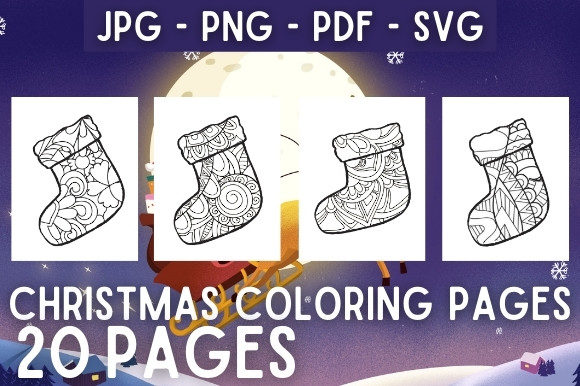
20 Christmas Coloring Pages: A Designer’s Embroidery Review
When a set of 20 Christmas Coloring Pages lands on my desk, I immediately think about how those crisp, black-and-white illustrations will translate into thread. As an embroidery designer and product reviewer, I’m not evaluating them for coloring; I’m picturing them stitched onto a cozy sweatshirt, a sturdy tote bag, or a delicate baby onesie. This collection, listed under the Coloring Pages Amp category as digital Graphics, offers 20 pages in a convenient 8.5 x 11 inch size. The real question is: can these printable designs become a reliable machine embroidery design asset for your craft business? Let’s dig in.
First Impressions: Clean Lines and a Cozy Holiday Mood
Opening the digital file, the mood is immediately festive without being chaotic. The designs range from classic ornaments and snowflakes to playful Santas and reindeer, all rendered in a professional, cool style. The line art is deliberate—thick enough to inspire confidence for digitizing, yet detailed enough to show personality. There’s no muddy shading, just well-defined shapes. For an Etsy seller or small shop product creator, that clarity is gold. It means fewer hours cleaning up a design asset before turning it into an embroidery file.
Translating Coloring Pages into Stitch: What Works, What Needs Caution
Not every coloring page is built for embroidery. These 20 Christmas Coloring Pages, however, feel like they were drawn with a vector-like precision that lends itself to digitizing. When I mentally map out a design, I see opportunities for satin stitch on the bold outlines, fill stitch for larger solid areas like Santa’s coat, and running stitch for delicate accents like snowflake centers. The versatility is a genuine strength.
That said, some designs contain tiny recesses—like the eyes of a reindeer or the gaps in a wreath—that could close up under high stitch density. On a textured fabric, those details might vanish entirely. I’d recommend simplifying such areas in your digitizing software, or opting for a slightly larger hoop size to preserve the original charm. The 8.5 x 11 inch page size gives you plenty of room to scale up, which is a huge advantage for creating a bold embroidered patch or a statement tote bag design.
Real-Life Embroidery Project: A Custom Tote Bag for the Holidays
Let me walk you through a real scenario. I recently used one of the 20 Christmas Coloring Pages—a cheerful Santa face with a curly beard—to create a custom embroidered tote bag. The final product was destined for a client’s holiday boutique order. I digitized the design as a combination of satin stitch outlines and a light fill stitch for the beard, keeping the stitch density moderate to avoid stiffness on the canvas. After testing on scrap fabric with a medium-weight cutaway stabilizer, the result was crisp and festive. The white thread on natural cotton popped beautifully, and the finished bag looked like a premium handmade product customers would happily gift.
That experience confirmed what I suspected: these coloring pages, when treated with a bit of digitizing finesse, translate into embroidery that feels both professional and personal. The design’s personality stays intact, and the finished product carries that handmade warmth buyers crave during the holiday season. A customer seeing the tote bag immediately recognized the cheerful Santa and smiled—that kind of emotional connection is exactly what you want from a personalized gift or boutique item.
Using These Graphics for Printable Mockups and Product Previews
Before you even start digitizing, these 20 Christmas Coloring Pages serve as fantastic printable mockup tools. Print a design on paper, cut it out, and place it on a blank sweatshirt or tote to get a real feel for scale and placement. This no‑cost preview helps you avoid costly mistakes and lets you show clients a tangible vision. For digital embroidery file sellers who also offer design assets, incorporating these coloring pages into a bundled embroidery project kit adds immediate value and helps customers visualize the finished product before they stitch a single thread.
Where These Designs Shine in Handmade Products
The collection’s versatility means it slots into a wide range of embroidery project ideas. I’d happily use these on:
- Custom apparel like sweatshirts and t‑shirts, where a festive motif adds instant charm.
- Sweatshirt embroidery for a cozy, personalized gift.
- Baby embroidery on onesies or bibs, sticking to the simpler, softer designs.
- Aprons and kitchen towels for a holiday‑themed home seller.
- Pillow covers and blankets for nursery decor or seasonal throw pillows.
- Embroidered patches that can be sold as standalone small shop products.
- Tote bag designs that double as walking advertisements at craft fairs.
Each design’s warm, recognizable theme strengthens brand consistency and buyer engagement. A customer scrolling through an Etsy listing will instantly recognize the holiday spirit, and that emotional pull can tip them from browsing to buying.
Tricky Situations: When to Proceed With Care
As much as I appreciate these designs, no collection is a universal fit. Here’s where I’d exercise caution:
- Small hoop sizes: Some designs are intricate; shrinking them to fit a 4x4 inch hoop might lose essential details. Stick to 5x7 or larger for best results.
- Stretchy fabrics: On a thin, stretchy T‑shirt, the dense areas of a fill stitch could cause puckering. Use a no‑show mesh stabilizer and consider a lighter stitch type.
- Dark fabrics: The designs rely on clear outlines. On black or navy fabric, you’ll need high‑contrast thread colors—maybe a metallic gold or bright white—to keep the image legible.
- Curved surfaces like caps: The straight, rectangular proportions of the original 8.5x11 artwork don’t always map nicely onto a curved cap brim. Choose simpler, more square‑friendly motifs if you’re doing cap embroidery.
- Layered garments: Avoid placing a dense design over seams or zippers unless you’re ready for a digitizing challenge.
Practical Notes for Embroidery Designers and Small Shops
Before you load these 20 Christmas Coloring Pages into your digitizing software and start selling, there are a few non‑negotiable steps I’d recommend. These are habits I’ve built over years of turning design assets into digital embroidery files.
- Test on scrap fabric first: Always. A quick stitch‑out on the same fabric you plan to use will reveal any density or push‑and‑pull issues.
- Check thread color contrast: The coloring page concept is black and white, but embroidery thrives on contrast. A red outline on a white sweatshirt looks different from a dark blue outline on a gray tee. Test in black‑and‑white printable mockups before committing.
- Review stitch density: Too dense, and the design feels stiff; too light, and the fabric shows through. Adjust based on the fabric texture and final use.
- Confirm hoop size compatibility: Scale the design to fit your most common hoop size, and keep the aspect ratio intact.
- Inspect small details: Zoom in on the eyes, tiny stars, or thin lettering. If they’re under 1mm after digitizing, they may disappear.
- Use proper stabilizer: For a tote bag design, a cutaway stabilizer prevents distortion. For a lightweight baby embroidery item, a tear‑away might be enough.
- Check licensing carefully: The product page doesn’t explicitly state whether these 20 Christmas Coloring Pages can be used for commercial embroidery and resale of finished items. Contact the seller or review the terms before you list those personalized gifts or holiday embroidery products in your shop. You don’t want to invest time only to hit a licensing wall.
The Visual Impact on Your Craft Business
When you use these coloring pages as a foundation for machine embroidery design, the final finished product carries a professional, curated look that customers recognize. The designs are inherently “cool” and modern, so they don’t feel like recycled clip art. This lifts the perceived value of your handmade product, whether it’s a custom apparel piece or a set of embroidered patches. For Etsy sellers and small shop owners, that can mean the difference between a one‑time sale and a repeat buyer who trusts your taste. Using these design assets also helps you maintain a consistent holiday collection without spending hours sketching from scratch.
A Designer’s Bottom Line
I’ve worked with plenty of printable graphics that promise embroidery potential but fall apart under the needle. The 20 Christmas Coloring Pages are not that. They’re clean, scalable, and carry a festive identity that stitches out beautifully when you respect the material and the process. They fit naturally into a craft business that focuses on holiday embroidery, personalized gifts, or boutique custom apparel. While they aren’t a turnkey embroidery file—you’ll need to digitize—the time saved on design conception is significant. I’d confidently recommend these to any maker who wants to add a professional, cheerful touch to their holiday lineup. Just remember to test, adjust, and confirm those commercial rights. Then, let your machine do the rest.